The independent appliance repair shop across Florida
Stove & Range Repair — Book a Visit Today
We repair gas and electric ranges across Florida, freestanding and slide-in, all major brands, and you can call us to describe what yours is doing. The common calls are a burner that clicks but never lights, an oven running 60 degrees cool, a glass cooktop element stuck on high, or touch controls that quit answering after a storm. Humid Florida air and lightning surges are hard on control boards. Near the coast, salt air corrodes terminals and igniter wires. Our visit starts with questions, then testing: igniters, valves, elements, sensors, relays, wiring. We tell you what we found in plain words and which parts the repair needs. We work as an independent shop.
Call (800) 967-1507- Real people on the phone
- 7 days a week
- Quote in writing before any work
Taking calls until 5:00 PM ET
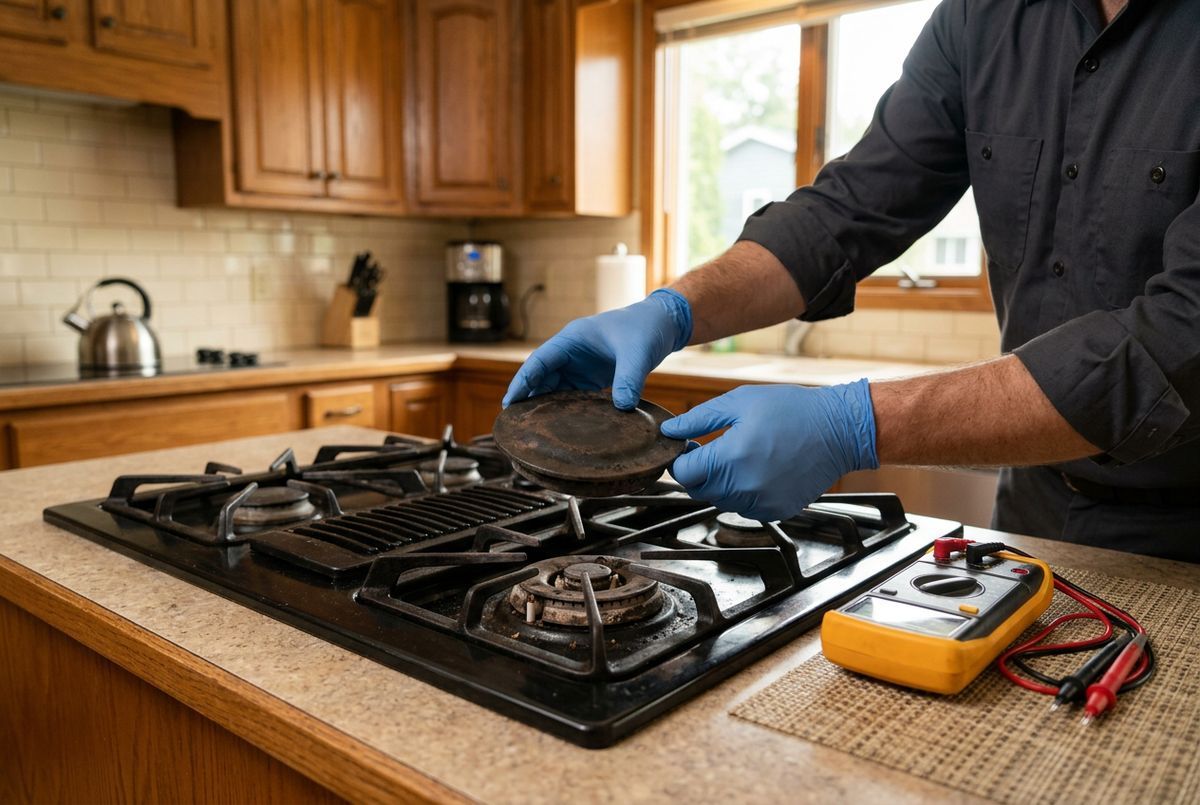
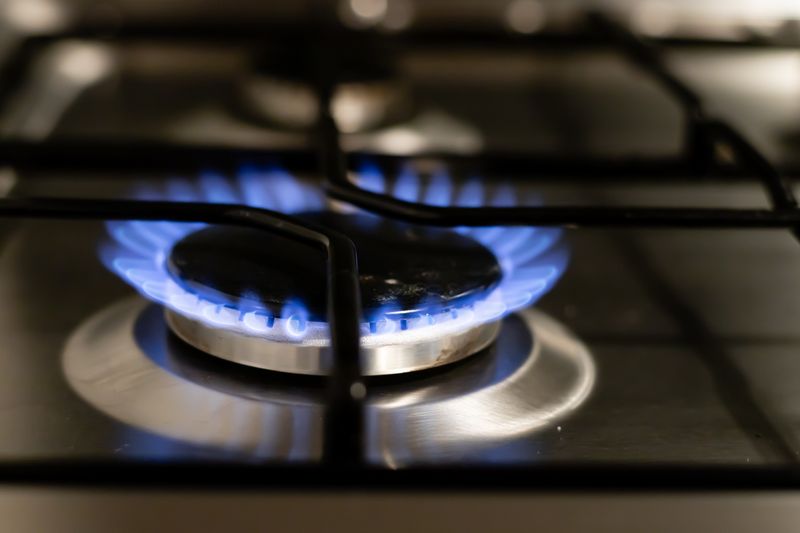
The stove & range symptoms we hear most
- "It clicks and clicks but won't light" Spark module, a worn igniter electrode, or food and moisture sitting in the burner ports.
- "My cookies burn on the bottom every time" An oven temperature sensor that has drifted, a weak bake element, or calibration.
- "The oven never gets hot at all" Failed bake element, a broken igniter on gas models, or an open safety valve.
- "One burner only works on high" Shorted infinite switch, or a surface element control relay stuck closed.
- "Buttons stopped responding after a storm" Surge damage to the control board, the keypad ribbon, or the supply wiring.
Safe things to check first
Worth a look before you call — sometimes it saves you the visit.
- 1Confirm the breaker is on and fully seated. A half-tripped breaker can leave part of the range dead.
- 2Check whether the oven is sitting in Sabbath, delay start, or lock mode on the control panel.
- 3Look for spilled food crusted around the gas burner ports, then let the burner caps cool and wipe them clean.
- 4Make sure the racks are in place and nothing like foil is covering the vent or the bottom panel.
What homeowners get from an independent shop
| C&S Appliance Repair | Big-box repair chains | Handyman listings | |
|---|---|---|---|
| You approve a written quote first | ✓ | ✕ | ✕ |
| Live answer seven days a week | ✓ | ✕ | ✓ |
| Every major brand, gas or electric | ✓ | ✓ | ✕ |
| Independent, no manufacturer quotas | ✓ | ✕ | ✓ |
| Crews familiar with homes like yours | ✓ | ✕ | ✓ |
What homeowners say after the visit
“They told me flat out the old freezer was not worth the part cost and helped me plan the swap instead.”
Tom B.Jacksonville, FL“Called at 8, booked by 8:15, fridge cold before dinner. I did not expect that speed.”
Angela P.Orlando, FL“He explained every step before touching a screw. Quote on paper first, then the work.”
Luis G.Tallahassee, FLStove & Range Repair — quick answers
Do you work on gas and electric ranges?
Yes, both. Gas ranges bring igniters, safety valves, and spark modules. Electric ranges bring elements, switches, and boards. Glass cooktops and slide-in models included too. When you call us, tell us the fuel type and roughly how old the range is.
My oven bakes unevenly. Is that fixable?
Usually. Uneven baking often traces back to a temperature sensor that has drifted, a bake element with a weak spot, or a convection fan that quit turning. We test the actual cavity temperature against the setting before we recommend parts.
Is a glass cooktop crack repairable?
A cracked ceramic top gets replaced, not patched. Stop using it, because heat and moisture can reach the wiring below. We can check whether the elements and switches underneath are still sound, then quote the work after inspection.
Why did my range controls die during a thunderstorm?
Lightning surges travel through house wiring and hit the control board first. Sometimes only the keypad or one relay is damaged. We test the board and the incoming power, then tell you whether a board replacement makes sense.
Should I smell gas around my stove?
No. A faint whiff during ignition is normal, but a lingering gas smell is not. Leave the house, don't touch switches, and call your gas utility or 911 first. Once the line is safe, reach us for the appliance repair.
How long does a stove repair usually take?
Many repairs finish in one visit when the part is a common igniter, element, sensor, or switch. Control boards and cooktop glass for less common models may have to be ordered. We tell you which situation you are in before we leave.
How it works
- Step 1
Tell us the noise
Describe what you see, hear, or smell. Buzzing, leaking, burning, or nothing at all. The model number helps if you can find the sticker. We'll ask a few questions and book a window that fits your day.
- Step 2
We diagnose in person
A technician comes to your kitchen or laundry room, tests the machine, and finds the part that actually failed. You'll hear what went wrong in plain words, then you decide whether repair or replacement makes better sense.
- Step 3
Repair and retest
With your approval we finish the work and run the appliance through a real cycle before we pack up. Floors get wiped and the packaging leaves with us. You also get care tips for our salt air and storms.
- A real person answers
- Open 7 days
- Written quote before work starts
Why homeowners call us
- North Florida conditionsCoastal humidity rusts drain pans, and salt air chews on dryer vents near an outside wall. Lightning surges kill control boards in the middle of a storm. We see these failures constantly, so we know which part to check first instead of guessing.
- Independent shopWe aren't tied to any manufacturer. We service refrigerators, ranges, dishwashers, washers, and dryers from most major brands, and our advice comes from what your machine needs rather than a brand sales script.
- Snowbird schedulesAn empty house hides problems. An icemaker floods in March, or a fridge quits in July and nobody knows. We do season-open checks and season-close shutdowns, and we can coordinate with a neighbor or your property manager.
- Straight answersSome machines are worth fixing and some are past it. If a repair doesn't make sense for the age and condition of your unit, we'll say so out loud, and you can put that money somewhere better.
- All major brands, gas & electricIndependent service on Whirlpool, LG, Samsung, GE, Maytag, Bosch, KitchenAid and the rest.
- Straight answersIf replacing beats repairing, you hear it from us first.
Stove & Range Repair
Small faults become big ones on a schedule of their own
Describe the symptoms and we'll book the visit — takes about a minute.
- A real person answers
- Open 7 days
- Written quotes
- All major brands
- Gas & electric
Rather not call? Get a free quote →