The independent appliance repair shop across Florida
Dryer Vent Cleaning & Repair — Book a Visit Today
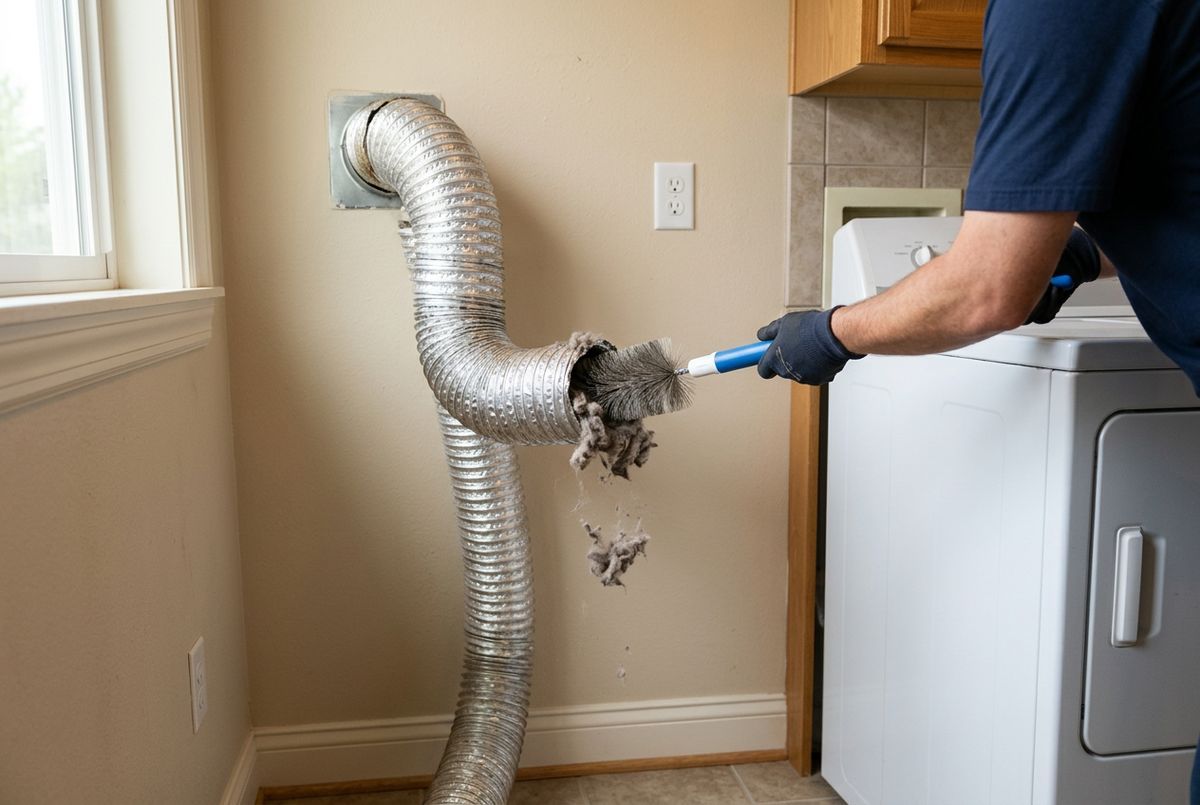
We clean and repair dryer vents, and the visit starts at the outside vent hood, moves back through the duct, then checks airflow at the machine with the dryer running. Loose joints get resealed and damaged sections get replaced. Lint does not stay in the trap. It slips past, coats the vent, and packs into every bend between the dryer and the outside wall, and Florida humidity turns that lint into damp felt. Then loads take two cycles, the laundry room gets hot, and the dryer shuts itself off on a heat sensor. A crushed transition hose behind the machine, a flap held shut by wasp nests, or a run that is simply too long will all do the same thing. Call us and describe what you smell and hear.
Call (800) 967-1507- Real people on the phone
- 7 days a week
- Quote in writing before any work
Taking calls until 5:00 PM ET
The dryer vent cleaning & symptoms we hear most
- Towels are still damp after a full cycle Blocked or restricted vent duct choking off exhaust airflow
- The laundry room feels like a sauna Exhaust leaking indoors from a split or disconnected duct joint
- Something smells scorched when it runs Lint packed against the heater or caught in the blower housing
- It quits partway through and needs a rest Thermal cutoff tripping on heat backed up in the vent
- No air puffing out of the wall vent outside Hood flap stuck closed, nested, or duct crushed behind the machine
Safe things to check first
Worth a look before you call — sometimes it saves you the visit.
- 1Pull the lint screen and hold it under running water. If the water beads up instead of passing through, scrub off the fabric softener film.
What homeowners get from an independent shop
| C&S Appliance Repair | Big-box repair chains | Handyman listings | |
|---|---|---|---|
| You approve a written quote first | ✓ | ✕ | ✕ |
| Live answer seven days a week | ✓ | ✕ | ✓ |
| Every major brand, gas or electric | ✓ | ✓ | ✕ |
| Independent, no manufacturer quotas | ✓ | ✕ | ✓ |
| Crews familiar with homes like yours | ✓ | ✕ | ✓ |
What homeowners say after the visit
“Fridge died the week groceries were stocked for a birthday. They squeezed us in same day.”
Cliff T.Jacksonville, FL“Zero pressure at any point. The quote sat in my inbox for two days while I decided, no chasing calls.”
Rita M.Orlando, FL“He leveled the machine, replaced the pump, and ran a full cycle before leaving. Thorough.”
Dean S.Tallahassee, FLDryer Vent Cleaning & Repair — quick answers
How often should a dryer vent be cleaned?
Once a year suits most households. Large families, pet bedding, and long duct runs load lint up faster, so twice a year is reasonable. If drying time has crept up over recent months, that is your real signal, no matter what the calendar says.
Can a clogged vent actually start a fire?
Yes. Lint is dry tinder, and a blocked duct traps heat right where the burner or element sits. Most dryers have safety cutoffs, but those parts fail. Clearing the duct takes away the fuel and lets the heat leave the house.
Is a longer vent run a problem?
It can be. Every foot of duct and every elbow adds resistance the blower has to push against. Long runs through attics or crawlspaces also collect condensation in humid weather, which glues lint to the walls faster.
Should I use the flexible foil hose behind the dryer?
Rigid or semi-rigid metal is the better choice. Thin foil and plastic accordion hose kink as soon as the dryer gets pushed back, and the ridges catch lint. We swap crushed transitions during a visit when needed.
What about the vent hood outside?
Coastal homes see a lot of trouble there. Salt air corrodes the flap hinge, and wasps and dirt daubers build inside a hood that sits still. A stuck flap blocks everything, no matter how clean the duct is.
Do you repair vents or only clean them?
Both. Cleaning is the common call, but we also reseal separated joints, replace crushed or rusted sections, remount loose hoods, and re-route runs that were never right to begin with. Call us and tell us what you have seen.
How it works
- Step 1
Tell us the noise
Describe what you see, hear, or smell. Buzzing, leaking, burning, or nothing at all. The model number helps if you can find the sticker. We'll ask a few questions and book a window that fits your day.
- Step 2
We diagnose in person
A technician comes to your kitchen or laundry room, tests the machine, and finds the part that actually failed. You'll hear what went wrong in plain words, then you decide whether repair or replacement makes better sense.
- Step 3
Repair and retest
With your approval we finish the work and run the appliance through a real cycle before we pack up. Floors get wiped and the packaging leaves with us. You also get care tips for our salt air and storms.
- A real person answers
- Open 7 days
- Written quote before work starts
Why homeowners call us
- North Florida conditionsCoastal humidity rusts drain pans, and salt air chews on dryer vents near an outside wall. Lightning surges kill control boards in the middle of a storm. We see these failures constantly, so we know which part to check first instead of guessing.
- Independent shopWe aren't tied to any manufacturer. We service refrigerators, ranges, dishwashers, washers, and dryers from most major brands, and our advice comes from what your machine needs rather than a brand sales script.
- Snowbird schedulesAn empty house hides problems. An icemaker floods in March, or a fridge quits in July and nobody knows. We do season-open checks and season-close shutdowns, and we can coordinate with a neighbor or your property manager.
- Straight answersSome machines are worth fixing and some are past it. If a repair doesn't make sense for the age and condition of your unit, we'll say so out loud, and you can put that money somewhere better.
- All major brands, gas & electricIndependent service on Whirlpool, LG, Samsung, GE, Maytag, Bosch, KitchenAid and the rest.
- Straight answersIf replacing beats repairing, you hear it from us first.
Dryer Vent Cleaning & Repair
Small faults become big ones on a schedule of their own
Describe the symptoms and we'll book the visit — takes about a minute.
- A real person answers
- Open 7 days
- Written quotes
- All major brands
- Gas & electric
Rather not call? Get a free quote →